
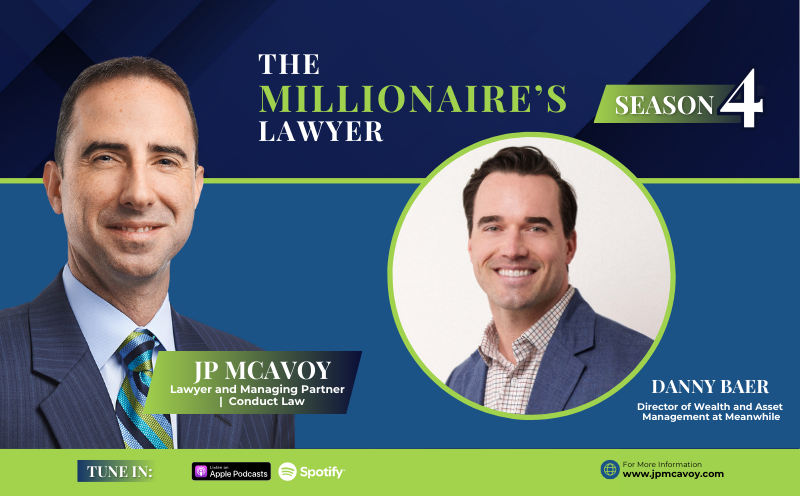
Bitcoin Wealth Planning: How Life Insurance Solves Taxes, Liquidity, and Volatility with Danny Baer
“The more use cases there are, the greater the adoption, and the higher the price will go. And then when the price goes higher, people feel richer, and they feel more need to do planning with their wealth.” —Danny Baer
As Bitcoin becomes a serious balance sheet asset, the lack of long-term financial infrastructure has become impossible to ignore. Selling triggers taxes, borrowing creates risk, and traditional insurance fails to keep pace with a non-fiat asset.
Drawing on his experience in traditional finance, Danny Baer now serves as Director of Wealth and Asset Management at Meanwhile, applying established insurance and wealth strategies to the realities of Bitcoin-based wealth.
Explore the full discussion and dive into:
- Bitcoin whole life insurance explained in plain language
- Tax-free policy loans and liquidity planning
- Estate planning strategies using irrevocable trusts
- Why Bermuda regulation matters for insurance stability
- Comparing Bitcoin loans versus policy loans
- Institutional interest in Bitcoin-based financial products
What long-term adoption means for Bitcoin holders
Episode Highlights:
- 02:39 Meanwhile: Operational Details and Policy Structure
- 05:47 Regulatory Framework and Trustworthiness
- 09:56 Policy Loans and Tax Advantages
- 19:47 Market Potential and Future Outlook
- 26:30 Competition and Market Differentiation
- 32:57 Building a Broader Global Footprint
- 38:35 A Key to Success in Business and Career Development
Resources:
Get Your Copy of JP’s Book
The Millionaire’s Lawyer: Grow and Sell Your Business for Maximum Profitability
Quotes:
02:49 “We do not care about the price of Bitcoin; we think about it as the exchange rate of Bitcoin, because we think about Bitcoin as a currency.” —Danny Baer
08:07 “If we ever lose any money for any reason, we lose all of our reserve capital, our own Bitcoin, before we ever lose any customer deposited premiums.” —Danny Baer
15:50 “The fundamental requirement for someone to buy this product is you have to believe that the price of Bitcoin will be worth more in the future than this today.” —Danny Baer
22:02 “There’s more and more uses for Bitcoin. As those use cases increase, you’d have to assume so will the demand for Bitcoin as a consequence.” —JP McAvoy
22:25 “age-old insurance— this is about as sexy as it can get.” —JP McAvoy
25:25 “The future of Bitcoin was not as a simple store of value, but rather as a currency. Now, to be a currency, there needs to be velocity; it needs to change hands, there need to be financial products, there needs to be capital markets.” —Danny Baer
31:54 “The more use cases there are, the greater the adoption, and the higher the price will go. And then when the price goes higher, people feel richer, and they feel more need to do planning with their wealth.” —Danny Baer
37:24 “The great benefit of Bitcoin, more so than the fixed income market or the total asset market globally, is that Bitcoin can upgrade its security.” —Danny Baer
40:07 “The better you treat people, the better you get treated.” —Danny Baer
A Little Bit About Nick:
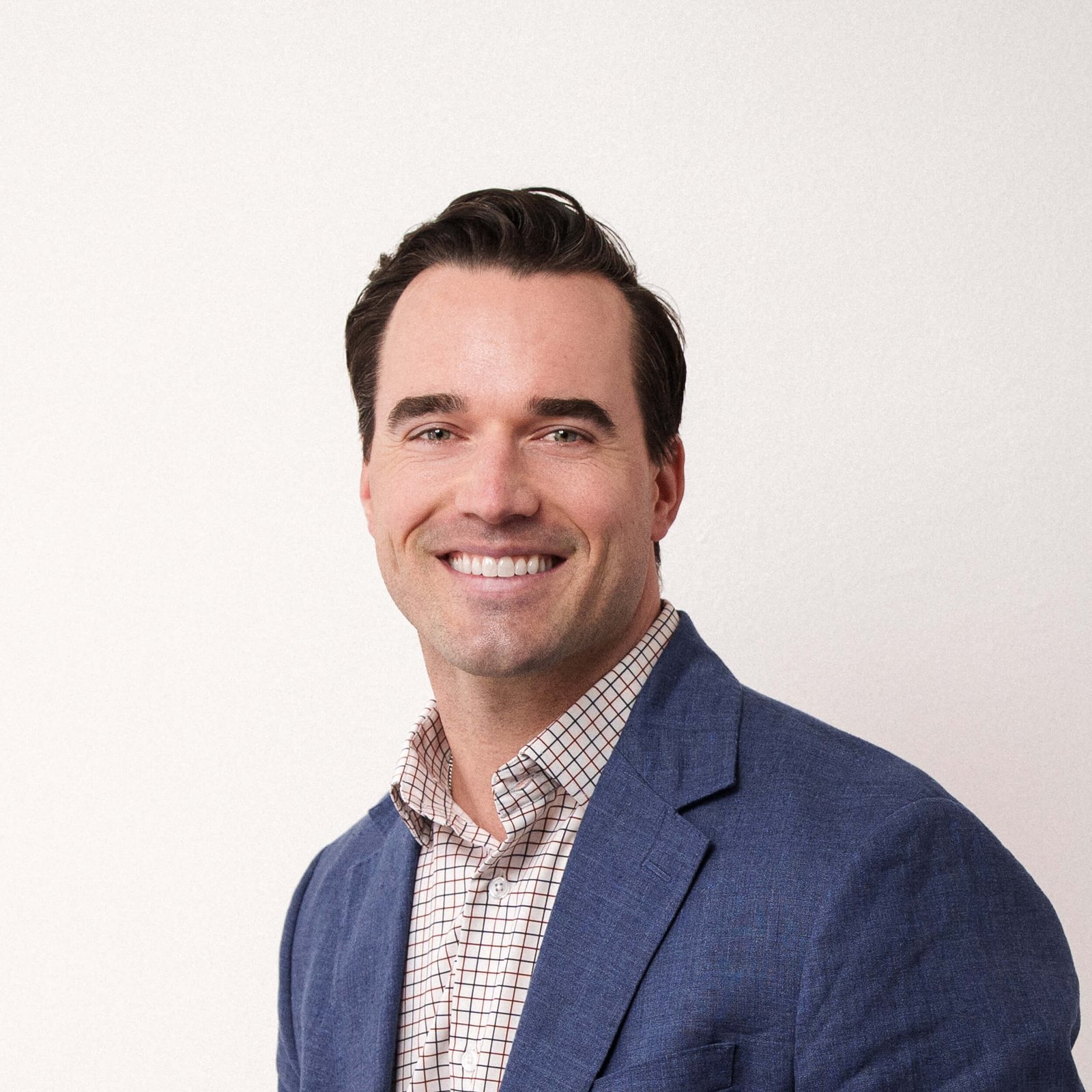
Danny Baer is the Director of Wealth and Asset Management at Meanwhile, a pioneering Bitcoin-denominated life insurance company. With a background in traditional finance, Danny graduated from Princeton University and began his career as an investment advisor in New York City, advising high-net-worth families. He later transitioned to the digital asset space, helping to build wealth management services for crypto entrepreneurs before joining Meanwhile. Danny now leads efforts to expand innovative financial products for the Bitcoin economy, leveraging his expertise in both traditional and digital finance.
TRANSCRIPTION:
JP McAvoy: Hi, and thanks for joining us on today’s show. We’ve got Danny Baer, who is the Director of Wealth and Asset Management at Meanwhile. You’ll hear how Meanwhile is the first Bitcoin denominated life insurance, a fascinating story into itself as the business and model continues to build itself out. Here’s my conversation with Danny.
Hi, Danny, thanks, and welcome to the show. Talking to us from Minnesota today, is that right?
Danny Baer: That’s right, JP, thanks for having me on.
JP McAvoy: Great to have you here. We’re just talking off line, but you want to introduce, I guess, what you’re doing with your days today. What type of work are you doing on a day to day basis?
Danny Baer: Yeah, of course. Again, I appreciate you having me on. I work at a company called Meanwhile. Meanwhile is a financial services institution that is built for the Bitcoin economy. So we actually started our business with a fully licensed and regulated life insurance carrier that uses Bitcoin as its currency. So there are no dollars inside our life insurance carrier, which means that all of our assets and liabilities are in Bitcoin. And all of our products, similarly, are denominated in Bitcoin. So our flagship product, which has been at market for about exactly two years now, is whole life insurance. And it is literally whole life insurance, but you can think about it as full life insurance in a foreign currency, and that foreign currency happens to be Bitcoin. So our policyholders pay their premiums in Bitcoin. We guarantee that their policy value grows in terms of the number of bitcoins at a percentage rate. Remember Bitcoins, they can take tax free policy loans against their life insurance policy in Bitcoin. And then, yes, their claims or their death benefit pays out in Bitcoin. And because it is legally in whole life insurance, many or all of those things inside the policy are tax free.
JP McAvoy: That’s right. So a lot of the tax advantages of a whole life policy still are obviously relevant, still applicable. And it’s interesting, the currency, if you will, is Bitcoin. People pay their premiums with Bitcoin, and any claims paid it that way. And it’s all in Bitcoin. I’ll ask the question, I’m making this assumption, it’s not really tied to the price of Bitcoin. Is that right? Because if you’re getting your Bitcoin back, or you’re getting Bitcoin back based on what has been paid in.
Danny Baer: We do not care about the price of Bitcoin. We think about it as the exchange rate of Bitcoin, because we think about Bitcoin as a currency. So the same way as Northwestern Mutual, because they’re an investor. The same way Northwestern Mutual doesn’t care about the dollar to Euro exchange rate because all their assets and liabilities are in dollars. We don’t care about the Bitcoin to dollar exchange rate because all our assets and liabilities are in Bitcoin. So we’ve operated this company when bitcoin is as low as sub $20,000. We’ve operated it as high as $126,000 or whatever the recent high was, and none of that price volatility has impacted our business or our solvency. Because if you give us 10 Bitcoins in premium, and we promise you 15 bitcoins of death benefit whenever you pass away, or we promise your beneficiaries 15 bitcoins of death benefit whenever you pass away, it doesn’t matter if the price of Bitcoin is 16,000 or 126,000, we’re turning 10 to 15 it’s whole life insurance, so the dollars don’t make an impact on our business.
JP McAvoy: Interesting that way. And what is a typical policy size? It’s interesting, you say 10, 15 Bitcoin. Is that a typical like, what do people–
Danny Baer: I would say our average policy is between 5 and 10 Bitcoins of premium payments. Our policy is structured as what’s called a 10 pay, meaning our policyholders pay their premiums over 10 years. And then after 10 years, they’re actually done paying. So you make one payment per year for 10 years, and then you’re done paying your premiums. Your policy will continue to grow or accrue in value over your lifetime, and then whenever you pass away. Doesn’t matter if it’s in year one or you’re in year 65. Hopefully, much later than sooner for both of you and for us. It pays out whatever the death benefit is. So you basically just divide the total number of premiums by 10, and that’s what you pay per year. So if it’s a 5 Bitcoin premium policy, it means you pay one half of a Bitcoin per year for 10 years. Or if it’s 10 Bitcoins, it’s one bitcoin per year for 10 years. But our policy actually goes as small as a quarter of a Bitcoin total. So point 0.25 Bitcoin per year for 10 years, and it’s as big as 50 bitcoins of coverage. And the premiums to coverage ratio depends on medical underwriting. So your age, your sex, your smoker status, information, like that.
JP McAvoy: Is there any contract protection? I’m just thinking, what if you guys don’t exist when the claimant’s coming? Is there anything that you can guarantee that way that wouldn’t exist with a typical policy?
Danny Baer: I think this is a really important point. So the number one question I get from folks who are contemplating this is, how can I trust you? I buy life insurance from Northwestern Mutual, and this is less ME picking on them, and this is more ME giving them a compliment. But I buy from them because they’ve been on for 150 years, and they’ve paid out their claims. I can trust that they’ll be around in 60 years when I pass away. We’ve been around for, gosh, coming up on four years. I’ve been with the company for three years, coming up on three years. And so how can I trust that you’ll be around in 60 years? You’ve only been around for four. This was the main reason, actually, that we chose to build this business in Bermuda. Bermuda is like the risk capital of the world. Very critically, Bermuda is not the same thing as the Bahamas despite the fact that they’re both islands that start with the letter B. Bermuda is home to most of the largest global insurance and reinsurance carriers, so Chubb International, AIG. Apollo’s Athene, which makes up like 15% of the United States annuity market. And then Swiss reinsurance, Munich reinsurance, all these massive global carriers are based in Bermuda, because Bermuda has a very strong, built out track record of being a regulator to these types of risk based businesses. So we’re building there. They’re the perfect combination of that deep historical expertise for insurance carriers, but then also willingness to work with digital asset companies.
So Coinbase International is also in Bermuda. Jack Dorsey’s the Block is in Bermuda, and a number of other crypto companies as well. And so the reason that we chose to build there is because there are very clear cut protections for policy holders of policies, of carriers based in Bermuda. We have to hold reserve assets for any time we put capital at risk. Now, putting capital at risk includes, obviously, selling a life insurance policy. Because if JP McAvoy buys a life insurance policy from us and gets hit by a bus the next day, we still are on the hook to pay him the full death benefit. Not some pro rata portion based on the time that he’s been alive, but the full amount. So we’re putting capital at risk. When we sell a life insurance policy to anyone, we have to hold our own Bitcoin as a reserve to offset that risk every time we make an investment, because we have to grow the number of Bitcoins that we have on our balance sheet just the same way that Northwestern Mutuals to grow the number of dollars they have. But making an investment is putting capital at risk. So we have to actually deem the riskiness of each investment, and then hold a different percentage, the higher percentage for the riskier investments, lower percentage for the less risky to offset the risk of that, or the investment risk of that deployed capital. That’s why most life insurance carriers buy government bonds because it’s low risk, so they have to hold a lower percentage of regulatory capital to offset it.
The reason that I’m going in that detail is because it’s really important, if we ever lose any money for any reason, we lose all of our reserve capital, our own Bitcoin before we ever lose any customer deposited premiums. And there’s a reason that life insurance carriers have to undergo an ongoing internal audit. Ernst & Young is our internal auditor, ongoing quarterly external audit. Harris & Trotter is our external auditor, and so that our regulator can have a constant view of the financial strength of our balance sheet of that reserve. So that if we get to a point where eating into it, they can shut us down and repay our policyholders their Bitcoin back. And the last thing that I’ll say is, in the event of a default or bankruptcy, the number one creditors to be repaid in Bermuda are the policyholders of business. So if we get shut down, our policyholders get repaid out their premium paid Bitcoin back, all of our other creditors get repaid. And then if there is leftover reserve there after all credit has been repaid, our policy holders would even get some interest on top of their Bitcoin back.
JP McAvoy: I understand that. So you’re very traditional insurance in that respect. That’s all done by contract and order, though. When I say contract, I was talking and asking as to whether or not there’s actually a smart contract involved with that. But you’re saying that it’s just like traditional insurance, and insurance would be well liquidated according to credit rules.
Danny Baer: This is literally just life insurance. And I think people try to make it sexier than it is. It’s not a defy company built on the blockchain. It is literally a company using spot Bitcoin as a currency. But otherwise, if you strip the currency from the business, it is literally a whole life insurance carrier. I even joke that our whole life insurance products are like a whole life contract from the 1830s, and we changed the word dollars to Bitcoin.
JP McAvoy: It sounds like you described it. Which is good to put it right up front, and then people have it. There’s a great reason to have whole life insurance as well. There’s obviously the ability to pay out. And then let’s talk as to what occurs when someone’s interested in boring against the policy, because that’s commonly done with the whole life policy as well, right?
Danny Baer: Yeah. I would say that a vast majority of our policyholders are buying this product with zero intention, hoping that it pays out a lot to their beneficiaries. Instead, their plan is to borrow out as much value from the policy during their life as possible. So that when they die, because you never have to repay that loan, it just nets out against the death benefit. And so if you, and I’ll use the example again of, you pay 10 Bitcoins of premium for 15 bitcoins of death benefit, if over the course of your life you’ve borrowed out 15 Bitcoins, so more than what you paid in premium when you’d pass away, it simply nets or washes out against the death benefit, and your beneficiaries receive zero. But it means that you’ve lived off of 15 bitcoins of value. And so the way that the loan works is, I’ll kind of slowly walk through a comparison of our loan products, or our policy loan product versus liquidity options on Bitcoin today, because this is a really distinct and important difference. So if you were to borrow dollars against your Bitcoin stack today, and there are a number of providers out there. Market typically is about, you receive a 50% loan to value, because Bitcoin is so volatile, so you don’t want to take more than a 50% loan to value because your collateral is volatile. You get a 50% loan to value. The market interest rate is about 12 to 14%. And at 105%, you get liquidated. You get margin calls. These loans can be open. They can maybe for some term, but you wouldn’t actually want to hold it for a long time. Because if bitcoin does correct 60, 70%, you don’t want to lose your Bitcoin. You don’t want to be margin called or liquidated.
So 50% loan to value at a 12 to 14% interest rate with short duration, what I would describe as now our product, you’re not borrowing dollars against your Bitcoin stack. Your life insurance policy is denominated in Bitcoin. We actually don’t call it the cash value policy. We call the Bitcoin valued policy, because there is no cash. So your policy values Bitcoin. That’s your collateral. And when you borrow out against it, you actually receive Bitcoin. But the Bitcoin that you receive is not the same Bitcoin that you paid into the contract. It’s brand new Bitcoin to you. It’s a tax free policy loan, so that Bitcoin receives a cost basis set to the price of Bitcoin at the time of that loan. So if I paid my premiums today at $90,000 per Bitcoin, and then 10 years of bitcoins at a million dollars, what I will do is I will borrow a Bitcoin against my life insurance policy. It will be worth a million dollars because that’s the price of Bitcoin, but its cost basis will also be a million dollars. So I can sell that Bitcoin immediately, tax free, because I’m selling it at cost. We offer a 90% loan to value, and we can do that because there is no volatility. Your loan and your collateral are both Bitcoin. So Bitcoin, the price of Bitcoin drops 75%, your loan is still just one bitcoin against 1.1 bitcoin of collateral, or 9 Bitcoin against 10 Bitcoin of collateral.
So we offer a 90% loan value, we charge a 3% interest rate, and you never have to repay the loan, and you never have to make an interest payment. Because whenever you pass away, your total loan balance simply gets deducted from the death benefit of the policy. So most of our policyholders, their intention is to put Bitcoin at what I would call relatively lower prices today, because they all believe the price will be higher in the future. Pay your premiums at today’s price, and then when the price appreciates in the future, be able to sell Bitcoin tax free regardless of the price at that time, and then never worry about repaying it. In fact, the only time we really expect anyone to repay their loan is if the price of Bitcoin drops 75%, because they can buy cheaper Bitcoin and repay their loan using that cheap Bitcoin. So if I take out one bitcoin loan at a million dollars, I sell it, I have a million dollars cash. I wake up the next day and the price of Bitcoin is $250,000, I’ll take my million dollars of cash, I’ll buy a $250,000 Bitcoin, use that to repay my one bitcoin loan, and then I have $750,000. But on the reverse side, if I woke up the next day and the price went from a million dollars to $2 million, then I would never think about repaying that loan. And when I pass away, my beneficiaries will receive 15 minus my outstanding loan and that payout because his life insurance is tax free.
JP McAvoy: It’s compelling. In comparison, Bitcoin loans sound extremely attractive. So why isn’t everybody doing this? What are the pitfalls? What are the risks here that we’re not seeing?
Danny Baer: I think, well, in terms of risks and pitfalls, the regulatory posture that we have has really addressed many of things like, what happens if you go out of business, and we’ve already covered that. I think one is that we’re new, and so every person that I talk to is like, wow, this is mind blowing. I can’t wait to sign up and do this. I do think that a hurdle that we face is just the history of bad actors in space. And that’s, I think, is clear. It was, again, another main reason that we decided to go to Bermuda, which is like the number one global regulator for insurance carriers. If we had gone to one of the other islands that have regulated insurance or crypto companies, we probably would have been able to build this company a lot faster. But that’s not always a good thing. Especially, we have to build thinking about what our company is going to look like 50 and 100 years from now. Whereas most crypto companies are thinking about how we can make as much money as quickly as possible. So we’ve taken a little bit of a different approach there. But no, I would say that the fundamental requirement for someone to buy this product is you have to believe that the price of Bitcoin will be worth more in the future than it is today. Yes, if you’ve made that bet, if you’ve decided that Bitcoin is a good thing for you and your family to own over the long term, I am convinced that this is the best product to do it through because it’s the most tax efficient way to do it. And then we haven’t even gotten into it. There are more complicated ways to structure the ownership of a product, to optimize for estate taxes and things like that, which some of our more sophisticated or larger policyholders are doing. But if you’re going to own Bitcoin for the long term, this is the best, most tax situation to do it.
JP McAvoy: When you’re describing the other ways, is this corporate owned? Or what are people doing in that regard? Or is this privately owned? Or they, I guess, have to have their Bitcoin incorporation to pay the policies. How does that work? How much of this insurance is corporate owned?
Danny Baer: The majority is individually owned. So it’s an individual life policy. So most of it is owned either by an individual or by a revocable trust. But we have actually had some companies who have Bitcoin on their balance sheet, purchase it as a form of key man risk. So the founder, the CEO, they’ll buy the policy as it is, as a whole life insurance policy, as a form of key man. But we’ve also had family offices buy it through irrevocable trusts, so that the payout of the policy, because life insurance, whole life insurance pays out income and capital gains tax free. But if you own the policy yourself individually, it does settle into your estate. So if you want to plan for estate taxes, if you’re large enough, I don’t have to worry about the estate tax. Not yet if you are concerned about the estate tax. One thing that you can do is own the policy through an irrevocable trust, so that the payout not only pays out income and capital gains tax free, but also settles outside of your state. And added consideration here, or why our product is so attractive to do that is many of these people are saying, well, Bitcoin is a high growth potential asset. That’s something that I want to grow outside of my estate, so why don’t I just move Bitcoin from my personal name, my revocable trust, to an irrevocable trust?
The issue there is, if they stop there, when they pass away, that Bitcoin is not in their state, and it no longer gets stepped up on a cost basis. The beneficiaries of that trust then go to sell that Bitcoin. They’re going to trigger a large tax event, capital gains tax bet. If instead they don’t stop there, if they take their Bitcoin and they transfer it, they gift it to an irrevocable trust, and then they have that trust buy a life insurance policy, use those bitcoins to pay the premiums, then when they die, the life insurance policy pays out, well, not just Bitcoin, but more Bitcoin than what they paid. And it’s a brand new cost basis Bitcoin, so you’re getting more Bitcoin at a more attractive cost basis into the trust at your passing than if you were to just simply give Bitcoin to a trust. So those are the types of things that some of our family office and ultra high net worth policyholders are doing. There are considerations there where it’s the policy owner, which in this case, is the irrevocable trust that gets to take those loans. So it’s really a question that we can kind of guide people through of what is your main intended use case. Is your intended use case to plan for the estate tax and tax efficiently pass wealth onto the next generation? Or is it to live off of this Bitcoin wealth via these loans? And then you can do some spousal lifetime access trusts if you want the best of both worlds. But generally how we see it play out is most people own them individually because they want that loan, but some of the larger policy holders are doing it for estate tax purposes.
JP McAvoy: Great. So there’s lots of planning opportunities as we’re discussing here, and looking for a lot of these sounds too good to be true, right? When you’re describing, especially that bump and cost base is really attractive if bitcoin does what a lot of people suggest it’s going to do, which is to continue to increase in value. What’s your thesis on that?
Danny Baer: I think that the price of Bitcoin will be significantly higher in the future than it is today. I don’t have a price target for next year or when it’s going to hit a million dollar price target, but that is the beauty of building the company that we’re building. We don’t care about what the price is, but we do believe that the price will be higher in the future than it is today. I think Bitcoin has behaved as a macro asset. You look at what’s happening in Japan in the last week, you look at what’s happening here at home in the United States, I don’t think that we’re seeing a world where fiat currencies are being constricted at all. And so I think that as more dollars or fiat currency hits the market in time, those dollars make their way out the risk curve, and that has historically benefited assets like Bitcoin. So I think if you’re looking at it as an inflation hedge or a geopolitical risk hedge, it’s incredibly attractive.
And then for our product, specifically, it’s our opinions, our thesis, that people globally are dramatically underinsured. Because if you live in Turkey, why would you ever buy life insurance from the Turkish Iira. Turkish Iira has lost like 90% of its value in the last five years. The Argentine peso. These people in these countries don’t buy insurance because the life insurance policy will actually outlive their fiat currency. And so the value proposition here is we give all these people, if you have an internet connection, you have the ability to buy bitcoin, and you have the ability to buy whole life insurance now in that Bitcoin. And so the United States, we started here because we’re from here, and we understand the regulation, how to design products in the United States and in Canada. Our chief insurance officer ran the individual life business at New York Life, which is the second largest life insurance carrier in the United States. We understand the US market. The Canadian market is the best so we started there. But the company, by no means, is restricted to the US and Canada. We see the opportunity is very global.
JP McAvoy: And your clients are from all over the world, obviously. Strikes me as compelling. I buy into the thesis. There’s more and more uses for Bitcoin. This being another very compelling one. As those use cases increase, you’d have to assume, so will the demand for Bitcoin as a consequence, because they’re not making any more of it, as I understand. So, yeah, that’s where we’re at with this now. Again, fascinating to think about and watch traditional finance, right? We’re talking insurance, age old insurance. This is about as sexy as I can get when we’re talking Bitcoin, but that’s really about as sexy as I can get. How did you get into this? You’ve got a background in traditional finance, tell us how you got here.
Danny Baer: Yeah. My background is pretty boring. But before we pivot on the traditional finance piece, the big news yesterday was that $11 trillion Vanguard is opening up Bitcoin or crypto related products to all of their clients. And they were kind of like the old school holdout when the Bitcoin ETFs were launched almost two years ago. So we’re seeing this flood of capital come in. And I think that not just traditional finance institutions around the world, but governments, sovereigns, pensions, insurance companies around the world are viewing this as a strategic asset. And to your point, they’re not making any more of it. I’m not that good. My econ grades are not that good in school. But yeah, supply, demand, I do understand that that’s right in terms of my background. My background, like you said, is in traditional finance. I graduated from Princeton University in 2017. Like most of my classmates, I moved to New York City to work in finance. I was an investment advisor at a pretty big multifamily office, so we managed money for taxable families. I think the firm now manages like $30 billion across, fewer than 200 client families. I think the minimum is $50 million of investment assets, but it’s basically 50 million to a billion dollars per client family.
And then in 2022, I was actually recruited over to help build out a multifamily office specifically geared for crypto digital asset entrepreneurs. So folks that were making a lot of money in 2022, but didn’t want to then go hire my previous employer that didn’t understand digital assets. So we were actually a subsidiary company of a digital currency group who, at the time, was the largest venture fund. And the thesis was actually pretty simple. Largest venture fund in the crypto space, they make investments into portfolio companies. Those company founders get liquidity, and they turn around, and they hand it to the wealth management arm to then manage that wealth. I was the first wealth advisor at that firm to help build out that team, and the timing was not good. A fellow subsidiary of the parent company was Genesis lending, the largest lender in the crypto space at the time who went bankrupt when three hours capital, the hedge fund, went down in that summer. So within two months of my joining, I think the price of Bitcoin dropped like 65%, and we actually wound that business down.
The wealth management arm, we wound that business down in January of 2023, and then I was actually contacted by Zac, our CEO here at Meanwhile, to come over and join. But the reason that I actually chose Meanwhile rather than going back, tail between our legs, going back to traditional finance or something else, the reason I chose Meanwhile is in the time that I spent under the digital currency group umbrella. My level of conviction that Bitcoin and crypto were two separate things grew, and that the future of Bitcoin was not as a simple store of value, but rather as a currency. Now, to be a currency, there needs to be velocity. It needs to change hands. There need to be financial products. There needs to be capital markets. And when Zac reached out to me, Meanwhile, it was the first financial institution that was treating it as a currency. So I actually had no background in insurance. I didn’t know anything about insurance. That wasn’t the value proposition. But the value proposition to me was, okay, this is an opportunity to build a financial institution using Bitcoin as its currency when you start with life insurance. But that leads to asset management. It leads to wealth management. Every insurance carrier tends to be a three legged stool, and it was an opportunity to get in at the ground floor and help build something special.
JP McAvoy: And that’s fascinating to see. And as you’re not the first person, and certainly not gonna be the last person to transition from Trad five to this new space as it emerges, right? You cite Bitcoin as a currency and the building block for a lot of these types of businesses. What do you think of the future with your crystal ball? So it’s Bitcoin, and it sounds like you’re a Bitcoin maxi, obviously. You focus on Bitcoin, but you even seem to distinguish Bitcoin. What is the future of other cryptocurrencies? I guess it’s a bail. I’ll ask this like Ethereum. I think even some of the other big cryptocurrencies, are they going to have a long cycle? Or is it going to be just Bitcoin?
Danny Baer: It’s an interesting question. Obviously, I work at a Bitcoin only company. I would say that I’m probably Bitcoin maxi, but I’m not the Bitcoin maxi to the extent where I think everything else is worthless. But I do draw that distinction where bitcoin is, in my mind, a currency. It’s a store of value, and everything else is technology. There are really interesting things that you can build on Ethereum or Solana, or one of these other protocols, and I don’t think those are worthless. We’ve actually had a lot of people approach us and ask us to build a life insurance carrier that’s similar to the one that we have, which is Bitcoin only to build one for Ethereum, or Solana, or something else. The issue there is, if you ask me if Bitcoin is going to exist in 50 years, I will say, hell, yeah. Of course, it is. If you ask me if Ethereum, or Solana, or name one of the other leading protocols, which one is going to be the winner in 50 years? I have no idea. And if we’re selling whole life insurance, which are decades long contracts, you have to have a level of conviction that the currency is going to exist. And so that’s the primary reason that we started with Bitcoin, and we’re focused on Bitcoin, because it was the only digital asset that we had a high enough level of conviction would have staying power now. Again, I do think that there is value in the other protocols. I just don’t know which one will be the big winner in 50 years, and so that’s why we kind of stay away from it.
JP McAvoy: That’s right, you’re sticking with that now. And obviously, I was going to ask about Ethereum, or if there’s a municipal product. Because Tom Lee would say, no, we’re gonna have the same thing on Ethereum. Is anybody else building it? You have to have competitors that are building it there now.
Danny Baer: We know that there’s one Hong Kong based company that actually has a carrier in Bermuda as well. They chose Bermuda as their jurisdiction. And I think they’re, I don’t know, they’re in the regulatory sandbox. They haven’t launched out into the world yet. But I actually think that they’re doing Ethereum, not Bitcoin. They’re taking a slightly different approach to it. So they’re doing more like investment products for people in China than they are doing traditional life insurance coverage, to my knowledge. But there’s not a ton of information out there yet about them because they’re still building, but we’re the only people that we know that are doing life transit Bitcoin.
JP McAvoy: There you go. As we say, this is you were early, and this is in its infancy as well, so we’ll continue to check and see what things look like 10, 20, 30 years, as you say. Do you have any representation at Art Basel this weekend? We talked to these major crypto events we see occurring.
Danny Baer: Yeah. Our head of business development lives in Miami, so he may be swinging by, I’m not sure. But to your point about staying power and ability to operate, we’re very fortunate to be backed by some of the most amazing investors we think in the world. We’ve had a pretty successful fundraiser to this point. We raised $122 million this year alone. We’ve raised something like $144 million in total. But those backers include Northwestern Mutual, whose largest life insurance carrier in the United States. Apollo, and then Bain Capital and other folks like that. So there’s a great opportunity, we think, to kind of capitalize on this momentum as a first mover. And we’re just fortunate to have some great investors who have great relationships and distribution channels to be on board.
JP McAvoy: Are they bringing in as well the clients? As we’ve discussed this, there’s a lot of people that have a lot of Bitcoin, and they’re looking for ways to deploy it. This strikes me as a very attractive way to do that.
Danny Baer: Yeah. It’s not that big of a world, especially when you get into the Bitcoin space. So I would say, from our perspective, it’s great to have folks with connections to people with a lot of Bitcoin. We’re fortunate enough to have some pretty amazing investors on our cap table.
JP McAvoy: That’s good stuff. What do things look like 2, 3, 4 years for yourself? Obviously, Meanwhile builds itself out. And again, talked about how compelling an offer it is. What do things look like in a couple years from now, both from a macro when we talked about the economy, in the crypto economy, and yourself personally?
Danny Baer: I think what’s interesting is that, again, I joined three years ago. At this point, I’ve been around like the fourth longest of anyone on the team. When I joined, the biggest pressure at our business was regulatory headwind. We had an adversarial SEC, adversarial White House, everything that we were doing was kind of despite the regulatory environments. And so it’s been quite a relief in the last year to see this shift where we now have a head of the SEC who is pro crypto. I saw the odds yesterday, perhaps like 78% that the new nominee for the head of the Fed is very pro crypto. So I think in the next 3 to 5 years, we’re going to see continued regulatory clarity around this space in the United States. Hopefully as a leader. But then hopefully, that will kind of percolate abroad, and that’s going to lead to more innovation and more building, which is key to what we’re doing too. Because what you stated earlier, the more use cases there are, the greater adoption, and the higher the price will go. And then when the price goes higher, people feel richer, and they feel more need to do planning with their wealth, and then they find products like life insurance.
But from a business perspective, specifically to Meanwhile, and again, I already touched on this a bit, but life insurance carriers do not stay just life insurance carriers. Life insurance is a great way to get capital in the door, and then you have to do something with that capital. So every life insurance carrier, by definition, has to become an asset manager. And we’re managing Bitcoin wealth. Bitcoin capital already today, we’re going to build that out bigger. There are opportunities to take an outside capital as LPs to manage. Those are different revenue streams. And then when you have wealth, financial products, like life insurance, and that includes whole life insurance, which we have today, but it also includes annuities, it includes key man risk, it includes term or second to die, or there’s almost an infinite list of life insurance products out there. And as a normal life insurance carrier, we will bring those all to market. So you have financial products, you have investment funds or vehicles, and then it’s natural to bridge those two things together with wealth management. So there is an incredible opportunity to build and innovate. I think structure is a defining business for the Bitcoin economy, and I think the continued regulatory clarity is going to just help provide momentum to that economy as it builds up.
JP McAvoy: Will that all be Bermuda based as well, Danny? Or is there thinking of building that domestically?
Danny Baer: I described different businesses which we operated as different entities. And so Bermuda, of course, we will always have a strong presence there, especially on the insurance side of the business. But that doesn’t necessarily mean that an asset management fund has to live in Bermuda, or a wealth management company, RIA,has to live in Bermuda. Those could likely be built in other places. Now, we actually have a holding company that’s a Delaware Inc, so we’re already multi jurisdictional from that perspective despite the fact that all of our operations are in Bermuda. We’re proud American taxpayers, so we’re, like I said, multi jurisdictional. And then as we build out globally too, there are advantages to having presences in different hubs around the world. So there could be offices for the insurance business that aren’t just in Bermuda, but global as well. So I think that in 3 to 5 years, we will have a much broader global footprint. We will have a much broader product suite on the insurance side, but then we’ll also have a number of different business lines outside of just life insurance as well.
JP McAvoy: Or somebody will buy you. That’s where I can see this going. It’s just very compelling, right? And as this builds, I think those listening understand the opportunities, and people are going to reap that reward.
Danny Baer: I think it’s interesting because the value is, well, the question you ask is, who could acquire a business like Meanwhile? Northwestern Mutual is already an investor, and there’s clear synergy there. If they want to get into the digital asset insurance business, they just bolt those on to their business, and then they already have the distribution set up, and things like that. Now, on the flip side, I already mentioned Athene on this call. Athene is the largest annuity producer in the United States. They’re owned by Apollo, because there’s this great relationship between Athene, which generates liabilities. And then Apollo, which is a leading private credit fund. And so Athene goes out, collects dollars, they invest those dollars into Apollo’s credit funds, they grow the dollars, and then they pass those dollars back out to the liabilities that have been generated. So then there are crypto businesses out there that are in the business of managing assets who are looking for a liability generator. So that could be a different angle. That’s not just the traditional insurance company. But if the price of Bitcoin goes where we think it’s going to go, and our entire balance sheet is denominated in Bitcoin, and then you have to slap a multiple on the balance sheet if you want to acquire as we think that, hopefully we’re going to run out of time where anyone can really make that acquisition because the price would be too high. So I don’t know. We’re a relatively young team. Our founders are like 40, they have young families, and many folks on our team have young families. I don’t think that any of us is planning to retire anytime soon, so we’re happy to continue to operate, try to build this thing out and see what the opportunity is.
JP McAvoy: Happy you’re building as well. As you describe this, is there a concern with quantum computing? Is there any concern that Bitcoin ever gets broken?
Danny Baer: I love this question because it’s a question that has to be asked, and everyone’s asking it. Now, if I had a quantum computer and I could crack Bitcoin, that is something that I could do to make less than $2 trillion, and it would take a lot. It would take the most sophisticated quantum computing capacity to do that. It would take a lot less effort to crack the four digit PIN that controls the $900 trillion fixed income market. I think I’d rather $900 trillion easily than $2 trillion with great difficulty. The great benefit of Bitcoin, I think, more so than the fixed income market or the total asset market in the United States or globally is that Bitcoin can upgrade its security. Not every commercial bank around the United States or globally is going to be able to update its security. So yes, I think quantum computing poses a threat everywhere. I think that Bitcoin has the tools to protect itself against it. Not every bank that has like my grandma, who has the same password for every account that she has, is going to have the ability to protect itself from that capacity. And so I think that quantum computing poses a threat to a lot of things, but it poses a much greater threat, and there’s a much larger pie out there that is more easily had if you have that quantum computing capacity.
JP McAvoy: Yeah. It’s something that needs to be top of mind. It could be all of us. It could be the whole list of them. We just don’t know at this point, you need to certainly plan for. Danny, I certainly appreciate having you on. All of this gives us a lot to think of. If somebody wants to learn more or get in touch, what’s the best way to reach you?
Danny Baer: Our website is meanwhile.bm, BM stands for Bermuda. If you type in meanwhile.com, it’ll rewrite you there. So you can reach out to us through the website. There’s a big button that says, get started, and it gives you the option to send our team an email. You can reach out to me directly at danny@meanwhile.bm, always happy to spend some time chatting with people that are interested in learning more. We’re on Twitter and kind of all the other socials too. So we’re out there. We’re not too hard to find, just Google Bitcoin Life Insurance. And since we’re the only ones doing it, we should pop up at the top.
JP McAvoy: That’s right, you’re early. It’s fascinating to hear. Do appreciate you coming on describing it certainly, very compelling. I like to leave these shows with one thing people listening can take with them through the rest of the day, the rest of the week, something that maybe you’ve learned through the years, something that’s worked for you. What’s something you pass on to those listening?
Danny Baer: Yeah. I think the biggest takeaway for me across the different styles I’ve had in my career is how you treat people really matters. You can have a long career as a curmudgeon. If you’re really good at your job, people will deal with you, but unhappily. But if you treat people really well, you get a little longer leash, and hopefully you have the best of both, and you really are good at your job, and you treat people well, but not just internally with your co workers, but partners, people at different firms, do people favors, and they tend to come back to you. I don’t know if I believe in karma or just treating people well. But I think that the biggest takeaway for me is, at any stop along the way, it is better to treat people the better you get treated.
JP McAvoy: Great philosophy for business. Great philosophy for life. Danny, thanks so much for joining us here today in the show. I look forward to connecting next time on The Millionaire’s Lawyer.
Recent Comments