
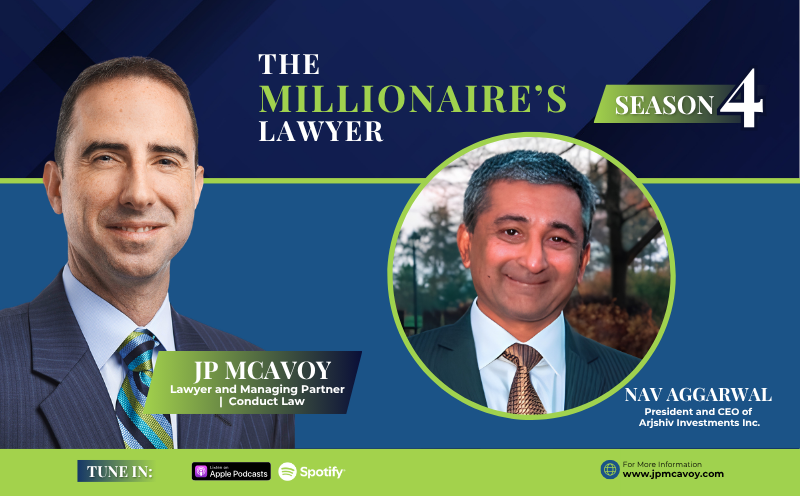
From a Trailer in Nova Scotia to Minority Owner of the Ottawa Senators with Nav Aggarwal
“Believe in yourself a bit more. If you’re really good at what you do, then do it for yourself.” —Nav Aggarwal
Nav Aggarwal’s father arrived from a poor village in India to teach on an Indian reserve in rural Nova Scotia — sleeping on two chairs in a trailer. From there, the family built gas stations, launched one of Canada’s largest generic pharmaceutical businesses, exited strategically in 2015, and became minority owners of the Ottawa Senators.
Nav walks through every pivot — the financing strategy, the moment globalization nearly killed the business, the decision to sell while strong, and the scholarship program now funding young women through university in India.
Hit play to explore how real-world entrepreneurship can fund freedom, community, and impact without losing sight of where it all started.
- Immigrant entrepreneurship and the mindset behind leaving a “safe” job
- Why his father pushed the family toward CPA and business skills, not medicine
- Scaling from gas stations to a major generic drug supplier in Canada
- Spotting market ceilings early and structuring a strategic exit
- Building plazas, community hubs, and temple infrastructure after the exits
- Designing a scholarship model that backs high-potential girls through university
- The case for self-employment and betting on our own skills
Episode Highlights:
01:12 Nav on Team, Players & Coaches
06:35 Early Childhood Challenges and Entrepreneurial Spark
10:01 Wealth Philosophy: “Make Money While You Sleep”
15:10 Financing Strategy — Leverage, Debt & Risk Appetite
20:30 Divesting Gas Stations — Environmental Costs & Strategic Shift
22:02 The Grind Years and Industry Disruption
26:08 Regulatory Wins
30:15 Sale & Aftermath — 2015 Exit and Company Growth Post-Sale
33:00 Life After Exit — New Passions & Giving Back
38:07 Philanthropy Journey: Impactful Scholarship Testimonials
42:00 Alumni Network — Building a Self-Sustaining Pay-It-Forward System
44:30 Advice to Entrepreneurs — Spotting Opportunities & Believing in Yourself
Resources:
Get Your Copy of JP’s Book
The Millionaire’s Lawyer: Grow and Sell Your Business for Maximum Profitability
Quotes:
10:06 “Land appreciates while you sleep, rental rental income comes in while you’re sleeping. When you run a business, you have people working for you, making you money. If you want to become a doctor, great, if that’s in your passion. But the problem with being a doctor is you only get paid when you work.” —Nav Aggarwal’s father
16:21 “Problem creates an opportunity as well.” —Nav Aggarwal
31:34 “What’s really important is we’re realistic about the future. Some people are very stubborn. We realize our weaknesses— not everybody does. We maximize that opportunity by realizing that there’s a weakness in what we’re doing, and we need to do something about it.” —Nav Aggarwal
40:32 “If you believe it and you work towards it, the universe has a funny way of putting itself together.” —JP McAvoy
41:59 “Remember the opportunity you got. Once you become successful, you’re in a position, pay it forward.” —Nav Aggarwal
47:20 “Believe in yourself a bit more. If you’re really good at what you do, then do it for yourself.” —Nav Aggarwal
47:32 “Believe, take the chance.” —JP McAvoy
A Little Bit About Nav:
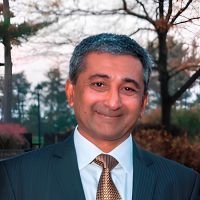
Nav Aggarwal is a prominent Canadian entrepreneur, investor, and minority owner of the NHL’s Ottawa Senators. Born to immigrant parents from India, he has built a distinguished career defined by strategic leadership and a commitment to community transformation.
Aggarwal is the co-founder of Marcan Pharmaceuticals and A&A Pharmachem, companies he scaled into industry leaders within the pharmaceutical ingredient and generic drug sectors. His business acumen led to a landmark achievement in 2015 when both firms were acquired by Emcure Pharmaceuticals.
Beyond his success in healthcare, Aggarwal maintains a diversified investment portfolio spanning real estate development, retail, and nutraceuticals. He is equally recognized for his philanthropic footprint, which includes leading major development projects for a prominent Ottawa Hindu temple and founding a scholarship program in India dedicated to supporting young women pursuing professional degrees.
Whether in the boardroom or the community, Aggarwal is known for his pragmatic approach and a steadfast dedication to creating opportunities for the next generation.
TRANSCRIPTION:
JP McAvoy: Hi, and welcome to the show. Today, I’m pleased to present Nav Aggarwal. We got a really inspiring story from one of the minority owners of the Senators who helped build and sell one of the largest generic pharmaceutical companies in Canada. He talks about how he and his family began from very modest beginnings, how they were able to grow it all and pay it forward. Here’s my conversation with Nav.
Thanks so much for joining us. Happy times, good times in Ottawa. Part of all of the Ottawa Senators. Great to see the season wrap up. Ottawa Senators are back in the playoffs for the second year in a row. How are you feeling about that?
Nav Aggarwal: We are super excited. Yeah. It’s been really great for the city. I think, more for anything because of my relationship with the Senators, I’ve got to know the players a little bit. I had a chat with Tim Stützle for a few minutes a few months ago, and they really believe they’d be here. I told them I really believe you’d be here, and I’m so happy for the players. I gotta tell you, they work so hard. So much adversity. I got to the coaching staff a little bit, they were just pumped. I was texting back and forth with the coaches, so everyone’s really excited. I’m hoping it’s a long run. But you know what they’ve achieved, considering we’re pretty excited.
JP McAvoy: It’s an amazing achievement, right? And it’s starting from the belief, I think, from the captain on down, right? Brady Tkachuk made it very clear that he believed they were going to be there. They never quit through adversity, through injury, through all the things. They said we are going to be here, they believe it. And it’s interesting. That’s where they are. We’re all celebrating in that, and maybe that’s a good sort of philosophy or way to launch into the conversation I wanted to have today about some – I mean, obviously, success with the Ottawa Senators, and your involvement there. But let’s go way back. Let’s go back to before that. This belief, did you ever have an inkling that you would have achieved the type of success that you have to this day.
Nav Aggarwal: Well, absolutely not. If you kind of see where I came from, and really, I was a bit of a spectator. I was fortunate to have a father and a mother who were extremely hard working and honest. And they came from really humble backgrounds, and that’s really what the story is about, in my opinion. My father was from a very poor village in India. He happened to be the eldest of 7. He happened to get educated with a teacher in a very small village. There was no opportunity. He came to Canada, and he built this incredible life. He got into entrepreneurship himself from being a teacher. He had three children. Two of them who stayed in the entrepreneurship world, built successful businesses, honestly created generational wealth. And myself being fortunate got involved in a passion of mine, which is sports. A very small minority ownership, honestly. But still, I’m part of something that I love. And the legacy that my parents left is enormous. We can talk more about that later on, but that’s really the story. You can kind of tell you how it all started.
JP McAvoy: To go back to the start, or how these things that you’re talking about have led to where we are now, the roots of it begin in India. An opportunity for him, which he sees. I think we can even say from there that he perhaps has the sense and is seizing an opportunity. So take us through what his early decisions were, and how it affected you.
Nav Aggarwal: Correct. So he was a 25 year old, he had a teaching job. Had gotten married, and he came across some people from the area who were going to Canada. Apparently, the Canadian government needed English speaking teachers back in the early 60s. The baby boom had happened. There weren’t enough teachers, so my father applied. The whole goal of coming to Canada was to make some money and send it back to the village. That was all about. He was willing to take that risk. So obviously right there, there’s something unique about my father. He’d really take that risk, so he landed in a very remote part of Cape Breton on an Indian reserve. Quite frankly in Cape Breton where he taught high school for a period of time, my brother had just been born, and they lived in a trailer parked on the school grounds. My father slept on two chairs, one for his rear end, one for his legs. And one bed for my mom and my brother. Two months before I was born, they had to move from the trailer. There wasn’t enough room. They found another place, and that’s kind of how it started within a year or so. But after two years in Nova Scotia, we ended up in Ottawa. Back then, the federal government, literally, had wanted signs on their buildings, and he got a job in the federal government.
JP McAvoy: This is interesting, though. Another opportunity, right? Seizing another opportunity. So he had the foresight and made a decision, obviously, to move from that rural Cape Breton. My family’s from Cape Breton, by the way, which is interesting. It’s a small world. My great grandparents were there.
Nav Aggarwal: I was born in Baddeck. I don’t know if you heard of Badeck. That’s where I was born.
JP McAvoy: So you’re born back then, and then your father comes here and brings the family here, obviously seizing another opportunity. What led to that? I mean, he wanted to, again, in the state of progress, I guess he’s thinking.
Nav Aggarwal: What he told me back then is, of course, being at a small Indian reserve was one type of life when he came to Ottawa. Though Ottawa was small, it was way bigger than that, right? So he just wanted to be in a bigger city, in a bigger environment. And getting a federal government job is huge. In India, that’s a lifetime job. Maybe like here too, maybe. So he thought, my life is settled, and that’s sort of how it was. And within a year, my sister was born. My parents had literally three of us within two years, 11 days. So our birthdays were born at 64, 65 and 66. And to make things even more amazing, when I think about my parents, I’m a parent myself. Personally, when I was born, my legs were kind of bow-legged. I had to wear braces on my legs to bed every couple of years, so that’s tough on a new immigrant family to deal with the son. And then as soon as my legs were sort of fine, they found out that I developed a massive stutter. So even now, I’ve got a massive stutter. I’m really good at hiding it. I’ve had it my whole life. And then that’s bad enough. So now, you got a kid who’s stuttered his whole life. I had speech therapy lessons. And then beyond that, I had some growth issues. So when I was 13, I was only 4 foot 6. When I was 18, I was 4 foot 11. So I was going to the doctors for tests. They didn’t find anything wrong. So dealing with the child that wasn’t growing normally was tough.
The irony, and if I can say it, though I had this massive stutter, I made my money selling. So I’m talking to people, which is kind of weird, though. I had braces on my legs. Without saying too much, I’ve won numerous athletic awards, so it’s kind of weird. But it’s just the way it was. So I’m saying that on top of the fact that they were struggling, they had three kids within two years, I myself was not an easy child to raise. But they persevered. They did wonderfully well. And then what kind of led my dad into business, which is really the story here, is my uncles. My dad’s brothers were in India. They’re a bit younger. They weren’t educated, they didn’t know a word of English, and he got a call from my grandfather. His father said, you’ve got to do something with your brothers. You got to bring them to Canada. They’re getting into trouble in India. What can you do? And my father was quite stressed. Maybe he was 27, 28 by then. And he said, what am I going to do with these guys? I don’t speak a word of English.
One day, my father went to a gas station very close to his work in downtown Ottawa, and the guy at the gas station attended, they’re all full. Says you want $5, $10, or a fill up. And he said to himself, I can teach my brothers those three words. So he really spent the next year hanging out at the gas station at lunch and after work, and tried to learn everything he could about the gas business. And that’s what he did. So he learned enough. He was able to put a little bit of money together, bought a little piece of property in Ottawa, and had a little house on the back. And he hired one guy, I think, and they made a little little gas station while he worked full time in the government. My uncles came over, and my dad’s brother ran it for 35 years. Never hired an employee. It was just him and his family ran it. He was very nervous about handing off anything to anyone at the time. He was uneducated. Today if you see him, his English is very broken, but he has a very successful life. His son’s a doctor at CHEO (Children’s Hospital of Eastern Ontario). So a very successful family, and he’s very grateful. So that’s how my dad got into the gas business. And in his lifetime, my father was a serial entrepreneur. He must have built 50 gas stations, maybe five truck stops. He opened travel agencies, donut shops. He had walk-in clinics, medical clinics. He had some plazas, the air cleaning business. He had his hands in everything. He was a serial entrepreneur, for sure. And that kind of inspired us, inspired him to kind of give us advice as we were growing up. So when we hit the high school point of our life, my father sat my brother and I down, and he kind of asked us what we wanted to do. And my father said that the secret to making money is to make money while you’re sleeping.
JP McAvoy: That’s right.
Nav Aggarwal: And everyone says, well, what does that mean? Well, land appreciates while you sleep. Rent and income comes in while you’re sleeping. You run a business, you have people working for you making you money. But he said, if you want to become a doctor, great, if that’s in your passion. But honestly, the problem with being a doctor is you only get paid when you work. So if you’re sick or on vacation, you’re not billing the government, you’re not getting paid. So he said, I really think you should avoid businesses where you’re a slave to your body. And that was what his worry was about the medical profession. Very unusual. Because of all the kids in our community, they’re all becoming doctors. And that was the dream of all parents in the Indian community, at least, that their parents become doctors or engineers, or primarily doctors. So that my father kind of veered us away from that because he’d seen business, and he really thought that was the way to go. He encouraged us to become CPAs or lawyers because he wanted us to be in the business world and have opened ourselves to opportunity. If we stayed in the medical profession, our knowledge is very narrow so he wanted us to avoid that. And so as a result, myself, my brother, and my sister were all CPAs. My brother’s an MBA as well. So we’re pretty educated from that perspective, but that was what drove us into the business world.
Then the next phase was very important to my father who was a teacher originally, that his children become professionals, so he encouraged us to study. And I can always give an example. When I was in grade 8, I had a paper route. And September rolled around and my dad said, we were struggling a bit financially, to be honest, and my dad said, I need you to quit your paper route. And I thought, Dad, it takes no time. And he said, son, I want no excuses. Your only goal is to do well in school. Because for us to separate ourselves from the local Canadians, we can’t be the same. We gotta be better. If they’re going to hire two people, they’re going to hire the local guy versus you, unless you’re better. So he wanted no excuses. Meaning, if we didn’t get top marks, you don’t want to say, oh, I had to work. So he really had his focus on the end game. Never worry about the short game, it was always the end game. Get highly educated, get into the top. You went to University of Waterloo, getting into the best universities, becoming professionals, and that was his goal. And it was achieved with all three of us. But it didn’t end there. Because what happened is a long story. My father was out of three gas stations by the time I graduated university. And then the question was, what’s next?
Fortunately, I got my CPA, and I passed my exams. I went to my father, I remember it clearly, and I said, dad, I got some great news. He knew I passed, but I said, look at that, I got a big bonus from these partners, got my own office. Things are looking up, I’m really excited. And instead of saying congratulations, the first thing he says is, son, we have a problem. And I said, what’s the problem, dad? He said, well, these guys, they’re giving you money because you’re making the money. And the longer you stay, the more they’re going to pay you, and you’re never going to leave. At that point, I was 23 years old. And he said, look, you’ve just come back from Waterloo. I’d like you to give me two years of your life. Because if you keep working and you meet someone, you’ll never leave so it’s better if you just quit your job. I was articling in a firm, and there they were now offering a full-time position. Quit your job. My brother had just finished his MBA. He was looking for a job. My dad said, don’t look for a job. I want the two of you to just join me for two years of your life. You have no commitments. You’re all living at home. Just come back home and let’s just see what happens. And that’s what we did. We went from 3 gas stations up to 11 stations in a couple of years.
One thing about my father is he really believed in debt. He believed in leverage. He had a famous saying that if you have $1 in the bank, you should go ahead, or two right away, because banks will lend you money if you have 33% equity. And he said, if you’re not smart enough to make more money than the bank on that two thirds, you’re not worth much. You don’t have that kind of confidence. S he had a tremendous confidence that he could take a bank’s money and make a higher return on that money than the cost of that money. So he was a big believer in leverage, and that’s how he did everything. He did everything without money, quite frankly. So we built a lot of gas stations, and then we kind of ran into some trouble. Because by 1991, the environmental lobby kicked in somehow. They convinced the banks that there’s a risk of only having gas stations in their portfolio because there could be leaks and so on. So really kind of around the 90, from 89, I joined the business. By 91, all the banks, almost at the same time, approached all of us saying that we can’t lend you any more money for gas stations. We have too many of them in our portfolio, it’s creating too much risk profile. So we no longer had any banks to finance growth so we were kind of stuck. My brother was the one who helped my dad in finding locations, rezoning properties, and helping to construct. My job was the second it was constructed, I had to find the guy to run the managers or the employees to run it. I set the gas price, I get it fixed, repaired, all that kind of stuff.
The operational side, I handled the finance, they handled the construction. So I was busy. I had 11 gas stations going, running around, and I was busy with that. My brother wasn’t so busy. He was kind of in a quandary, what to do next. So that is where that was. It was an opportunity, created a problem, created an opportunity as well. And so my brother did his MBA, international business was his MBA, specialized in that, and he said, why don’t we do some sort of import-export business? There’s lots of inexpensive stuff from over, we’re talking early 90s, no internet, there’s opportunities. And my father had a lot of contacts in India. We used to go back a lot. My brother tried ceiling fans and motors, for example. My father’s uncle’s relative was a CEO of a big company in India that manufactured them, so he approached them and said, my son’s got some time. Have you ever thought of exporting your ceiling fans and motors? No, sure, that’s what we did. So my brother got them CSA approved. We started importing motors and ceiling fans. And when we found a distributor in Brockville, Ontario, he was happy to take it on. But our prices were way cheaper than what he got from the US. It worked for a little while, but the quality didn’t. We couldn’t sustain the quality, so that business sort of failed. We tried bicycle helmets. My brother tried all kinds of stuff in this scheme of trying to figure it out.
Around the same time, my father had a friend of his in Toronto who was a pharmacist. And he said that there’s a need for less expensive ingredients to make all these generic drugs and medicines. Everything was coming from Europe or the US. India had just opened up in the pharma industry. My brother started exploring that opportunity, and that was the one that stuck. So basically, we were successful in being agents for many manufacturers in India. We helped some of the manufacturers become approved by Health Canada because you have to be a Health Canada approved manufacturer. We guided them with consultants, and then we became agents. The good luck in that was when we approached these companies in India, if we were based in the United States, they probably would never have given us the agency rights because we were just one man show. But we said that Canada was like Venezuela. They had no interest in Canada’s small population. If you want to try to sell our products in Canada, go for it. No problem.
That was a bit of a break, I think. And from that, we were able to become one of the largest suppliers of ingredients in both the nutraceutical and in the pharmaceutical industry in Canada. Built a very big business in that space between 90, really. So my story kind of backing up is between 91 and 95. We had the 11 gas stations that I was running. We started divesting them because part of the environmental laws required upgrading all existing gas stations.Cost 100 grand a station to keep them operating beyond 95. And we had 11 of them, and there was no way we could find $1.1 million. The banks were calling their loans. We didn’t have the cash. So in that four-year period, I was divesting, closing, selling what we could, and leasing out the really good ones. We had two or three really good sites. Major oil companies took them over from us. They agreed to do the investment to keep them operating, and we handed the keys to them, and they just paid us a rent. So by the time 95, 96 rolled around, I was out of work. And at that point, the A&A business, the pharma business was really in its nascent years. I think my brother had a growth profit of 80k by then. He had a wife, he had a kid. It really wasn’t big enough for me. I just had a kid as well, but it wasn’t big enough. I thought about my wife and I, and I thought seriously about moving to Hamilton and becoming a CA again. I’ve had a good friend there, and he asked me to come there, and I’d be a manager at Deloitte or something so I was contemplating that. I spoke to my brother.
My brother at that time was trying to get this thing to work, and he finally decided that, he said, look Nav, just stick around for a year. Let me take care of the pharmaceutical side, which is what’s used to make generic drugs like ibuprofen, mix Advil, and you handle the nutraceutical side, which is like the vitamin C, which is the calcium powder for calcium tablets, whey protein. So there were two distinct industries. The nutraceutical was non-regulated. The pharmaceutical, which he did, was regulated and more complex. So he said, why don’t you try this business, and I’ll try that business. And we did. Honestly, the timing was amazing. We flourished. Absolutely flourished. We hired our first employee in 98. Now, think about this, between 89 and 98, 9 years, we never hired an employee.
JP McAvoy: That’s unbelievable to think.
Nav Aggarwal: My brother and I were struggling, every doll going into the business reinvesting the business. We’re all kind of living in one joint family home. It was a really tough time, but we all sacrificed. We saw potential in the future. We could have got jobs. At one point, it was kind of scary. Well, not scary, but the reality was there’s me and my wife, my brother, his wife, and his daughter all in one house. It was kind of crazy. And in fact, both my kid and his second kid were all in the same house for a very short period of time. But we just didn’t have the capital. We were investing everything into the business, but that’s what it was like. And we hired the first employee in 98. People will see the roses, the Ottawa Senators stuff, but they don’t know what happened for 9 years in my 20s.
JP McAvoy: A lifelong of hard work to get to a moment of success. Or not a moment of success, but to get to the pinnacle of success.
Nav Aggarwal: That’s right. And that was really what happened. By 90, we hired the employee. And of course, by then, we’re doing very well. I moved out finally, and my brother had his own space. He had his family, his family was growing. I had a second kid as well, so it just worked out. The timing was amazing. We’re very fortunate. We built this ingredient business, it was going very well, and then another crisis hit. And what’s the crisis? Well, on my brother’s side of the business, he was selling to generic drug companies. These are companies that develop drugs that come off patent. So there were about 8 or 9 companies in Canada that developed generic drugs, and they would purchase their ingredients from us. We’d import from India, would sell to them, and they would make their tablets, and it would be sold in the pharmacies. But what happened is that globalization started in the 2000s.
So one of our big customers in Toronto called Novopharm was bought by an Israeli firm called Teva. We already have a direct relationship with that factory in Israel. And so we lost a customer there. Then our other customer, Montreal, was bought by a German firm. Another one in Toronto was bought by a US firm. So ultimately, our customers came down to 2 customers from 8, so my brother had no work. Back to the situation, we had no work to do. What do we do now? So my business was flourishing, the nutraceutical business. I was kicking butt. I was doing really well. Everyone’s getting into vitamins, and everyone’s getting into all this protein. When we first sold protein, I would literally deliver one drum to a gym in Ottawa. And now, it’s everywhere. Walmart, it’s mass produced. Everyone’s taking it, so we were at a really early stage in the industry, and that’s why we did it very well because we got into the right time. So I’m flourishing. My brother’s kind of thinking, what do I do now, right? And I said, look, I told my brother, there’s this business doing really well, why don’t you join me. We’ll split customers, and we’ll just ride this thing while it can.
But my brother wasn’t satisfied. He had a bit of my dad, but he had the visionary. He was the one who saw the pharma business. He’s the one who grew it. He said, why don’t we start making tablets instead of supplying the ingredients? Let us make tablets and basically vertically integrate the business. Because what had happened was our two main customers in Canada started bypassing us because our agency agreements in India had expired, and they wanted to go direct to the factories overseas. So all of a sudden, our competitor, our two customers were backdooring us. So my brother says, well, let’s get into their business now. If they’re going to backdoor us, let’s just compete. And that’s what we did. So we started getting Health Canada approvals for drugs. So one of our first approvals was Advil. So back in 2005, 2006, we got a drug over Advil. And even today, if you go to Shoppers Drug Mart, you go to Costco, Kirkland Brand, Life Brand, Walmart’s brand, Equate, all these brands even today, if you’ve taken any pills, it’s probably our pills. We’re the ones who had the approval. We got them manufactured overseas in India. We’d probably bring in hundreds of millions of tablets shifted into Canada. Went to Winnipeg, got packaged under Kirkland, Life, Equate, Soybean Brands, all those brands, and they’re still in the show, they’re probably our pills. So that was one of the drugs we got approved. My brother was obviously very bright. We’re able to hire some good people, and we went from one drug approval to 80 drug approvals by the time we sold the business. So 2005 was thought of. 2015, we exited. Now, the question is, why do we exit?
JP McAvoy: Yeah. It’s a lot of timing. All these are interesting, how there’s key things. It’s also being wise to the changing or the shifting sands, right? And I suspect that’s where we’re going. That’s next. I’ve heard frequently that there’s like, give me a year, give me two years. And then being sensitive to shifting sands, and I assume that’s what happens as you get to a spot where you transition again.
Nav Aggarwal: Yes, right. We have to go from API to tablets. Between 2000 to 2005, we saw an issue. And 2005, we started to help with business. The same thing happened in 2012. My brother sat me down and said, we have a problem again. We got a problem. And I thought, what’s the problem? He said, Nav, we were running out of generic drugs to get approvals. So the basic summary is that on that day, there were about 325 drugs that came off patent and that were genericized where copies were made. The problem was that we had done about 80 in our pipeline, which were the low hanging fruit. So easy to produce, low cost, good market size in Canada, those lots of market size. The more the math worked where the ROI was reasonable. The problem was that after the next 20 drugs that were on our pipeline, the ROI wasn’t working on them. And the reason and the problem was all of our competitors, maybe we’re number eight in Canada at the time, the top seven customer competitors were all global companies, so they were selling around the world, so they would do development. It might cost half a million dollars. They could amortize it around the whole world, but we only were selling in Canada, so that’s why all the other guys did it too before.
All our customers left us. We were just another one of those they probably hit their point where they couldn’t go any further, and that’s what happened to us. We realized a couple years in advance that our pipeline is going to shrink. And what happens in this industry is, as Shoppers Drug Mart, we’re selling to the other chains, there’s lots of chains. All these chains, they will only buy products from us as long as they know we’re investing in new generic drugs. So they’ll always want to see what our pipeline is, and what’s coming next. And they do bundling, right? So they’ll give us some nice easy stuff, stuff that’s been genericized for a while. We’re only bringing new stuff to the table, so our pipeline was shrinking. And my brother said that we are going to become irrelevant in a matter of time. We need to find a buyer, and that’s what happened. We hired an investment banker, and slowly but surely, it’s a long story, but we’re able to find and acquire, actually out of India, a big, big billion dollar company who had drug approvals in the US, had drug approvals in the UK, around the world, but nothing in Canada. And it was cheaper for them to just buy a company like us, as opposed to organically doing all the drug approvals themselves. They’re taking 8 to 9 years to get–
JP McAvoy: The timing as well, right? So that says, as you say, that the globalization in big pharma.
Nav Aggarwal: Yeah, exactly. That was really the key to what made us do this. So 2015, we exit. I have to admit, it was a good exit for me, my brother. There was an earn out period. The company now has tripled in size since we left it. And the reason it tripled was the company that we sold to had a number of drugs already proved in the US. They already did the R&D, and were able to transfer that to Canada. So the number of drugs in those things that we went from 80 to about 160, 170 drugs, they have now approved. So they’re a huge company now. There’s a lot of synergies, and that’s what worked for the choir. But the earn-out was also very good, so it’s been a really great success story. I left three years after that period.
JP McAvoy: Throughout the earn-out, you had a number of years post closing.
Nav Aggarwal: That’s right, that’s right. And so I left. I ran the ingredients company. I was still running on the side for while this was all going on. The ingredients company was kind of running on its own, and I was managing it all. I spent a little more time on the ingredients company, kind of grew into the US, grew more into the US market. And then around 2014, approached my brother about the idea of maybe one of the families taking over this business, because you know it wasn’t big enough for both families. We had both exited, and he showed an interest to continue to work, and I respected that, so he purchased my share. So really, since November 2014, 2024, I’ve kind of semi-retired, and I’m pursuing a lot of other interests.
JP McAvoy: Which is the natural progression as well. It’s wonderful to hear that in this succession, again, seizing opportunity, it’s interesting to hear that there’s been a lot of insight, and maybe credit to your brother. You were able to sort of forecast or predict what was going to happen with the markets and time yourselves accordingly, which seemed like the real strength of what you guys accomplished.
Nav Aggarwal: Absolutely. I think what’s really important is we’re realistic about the future. Some people are very stubborn. No, no, we’re fine. We’re fine. We realize our weaknesses, not everybody does. We’re both CA’s, we’re both very practical. I think we’re successful with one another because we saw things very similarly. There wasn’t one guy whose head was very high, or that kind of thing. He was definitely the visionary, I think, of the family. He was like my father. I think the visionary, they saw opportunities. I was more the guy who executed, helped execute, did a lot of finances, operations and stuff. I think we both could see the writing on the wall, and we saw it before maybe other people saw it, and we prepared ourselves. We maximize that opportunity by realizing that, hey, there’s a weakness in what we’re doing, and we need to do something about it. I think we’re very lucky. That way, we were able to figure it out. It’s really been a great story. And I think for me, it’s been a real blessing that I can do something else. When we sold the first company, I was 50 years old. When I go to the second company, I’m 60 now, as I was 59, 58. So I’m young enough to really do some other stuff that, I think, feels very impactful and rewarding. And I feel very blessed.
JP McAvoy: Absolutely. And you are making a difference in that way as well. You mentioned the sale, and obviously, it’s allowed you to do other things right. Where are these passions taking you? What are the things you’re working on now that perhaps we can give some energy to?
Nav Aggarwal: Yeah. I think you know a few things. The one advice I would say to people is it’s hard to just turn it in when you retire just to start something new. So whatever I was doing, I’m not trying to over promote myself. But whatever I was doing, I’ve been doing my whole life in some senses, but it’s just been much more now because I have more time. So to kind of give you some perspective, when I was a young kid, I was tutoring people, I was helping people. I managed 14 ice hockey teams. I ran City Soccer. It was a soccer club for 9 years. So me and a couple of guys, we ran it. So while I was building these companies, wherever my kids were involved in, I got involved in summer. I volunteered. I wanted to help out because I didn’t like the fact that these coaches were doing it for free, and I was sitting on the sidelines. It just bothered me. If I wanted to be part of something or help out, everybody else is helping out, why not me? And that was really my thing. So I had a whole life of being part of a community, or running hockey teams, or running a soccer club. I was part of scouts as well. I was on the foundation of the Cancer Foundation of Ottawa. I was on some boards. There was a big local temple in Ottawa, I’ve been there for 15 years. So this is at the heart of the growth. I was on the board of that organization. I became the treasurer, I still am. And it’s a huge responsibility. Every receipt, every $5 donations, receipts, finance and bookkeeping of it, and paying priests and everything, it was quite a bit of work. I was doing that all the way through while this craziness is going on with our businesses. So when I did end up selling A&A as a second business, I was already well-suited to doing stuff. So I was able to jump in and spend more time on the temple work, and I’m quite active. We’re doing a large $7 million expansion.
One thing I didn’t tell you about earlier is that my father, who was the pioneer of this whole thing. In 2016, he passed away. He was in the real estate business, that’s where he made most of his money. And so in 2019 when I left the original company who bought us, I decided to try to develop some of my father’s properties. I knew nothing about real estate, cold and fresh. Got a real estate agent, got an architect. My dad had the land, went to the city, got it rezoned, and had built a plaza. So I built a plaza with Starbucks in it, and Domino’s and all that. One other second plaza with a Wendy’s and the Tims. So I just developed, I kind of completed what my dad’s goals were. I had time after that to do that, so I did that. I enjoy doing that. We have two or three small plazas in the family that I helped build again. My father had the vision on the land, and I just kind of completed it. So with the temple, we wanted this great expansion. And on the board, I’m the only one who’s got any experience in construction and building, and so on. We’re in the midst of doing that right now, so I’m very active on that. And I think the Hindu community in Ottawa is huge now. We would have maybe 2000 people come to a main event. Now, we’re having 8000 people come. I see the impact it has on these people. They’re new immigrants, they don’t know anybody. It’s a gathering point, it’s very important to them, that’s why they come. So if we can reinvest in the temple and make it better for the community, it’s great. I spent a lot of time on that for the local community. Outside of that, my wife and I from India, of course, we’ve always just wanted to do something in India.
So four or five years ago, again, after 2019 after the exit, we decided to start a foundation, and we found an NGO in India, which is non-government or nonprofit in India, to administer the scholarship program that we created. So what we look for is we look for very bright young ladies. India has standardized testing so you can really figure out who’s smart, who has high marks and who doesn’t, bright girls who are highly motivated, who apply to get into universities, who want to go to become doctors or engineers, so they need some funding, so they apply to our scholarship. It’s advertised by this nonprofit in India. We might get 800 applications a year. We initially accept 20 to 25. This year, we’re going to be accepting about 55 students. And then once they get into the program, we cover their education for a full four years. And they become doctors, engineers, and it’s just so wonderful. The beauty of the experience for my wife and I in the program is we get to meet every girl for five minutes a year. We have a Zoom call, we get to know them year after year. We could see the growth from year one to year four. They’re completely different people, and they’re beautiful and intelligent, and they’re motivated. It feels great to have impacted them.
JP McAvoy: They’re making a difference, too, right? So going back to your father inspires inspiration for the things that you’ve allowed to finish. I think the same thing’s happening, and maybe some things that he was originally doing, making those around him better, giving those around him the opportunity to continue to do the same thing.
Nav Aggarwal: Yeah, exactly. And to kind of emphasize the impact this is having. So in these five minute phone calls, we get to chat with the ladies, young girls. We had one call where my wife was asking the young lady, tell me what you’re going to do in the summer? You’re off school, are you going to hang out with your friends? She goes, no, I’m taking a robotic engineering course. So my wife said, no, no, what are you doing for fun? You’re going to go to the movies, hang out with your friends? She goes, no, no. Are you talking about that? Well, I did that for the first 17 years of my life. I’m not wasting any more time. They do not take education for granted. They are driven, and they’re motivated. These are special children that needed a little assistance. So that’s good for us to see. And then the girls, of course, they’re very thankful. Every time they call, thank you for this. We tell them that you are meant to be a doctor in the Hindu tradition. We really believe in karma and destiny. We say you were meant to be a doctor, and we’re just simply conduits. We are simply, we have to make the money and get it to you somehow. So really, it’s all you, it’s all your hard work. You got the scholarship. You worked hard. That was your destiny, and it had to come through somebody. I think that’s something that we feel. So a couple more points on that, and we can move.
JP McAvoy: I want to focus on that for just a minute, because that’s so important. You need to talk about from the Hindu tradition, there is something that people know is going to happen, right? If you believe it the way we kind of began the conversation, and you’ll work towards it. The universe has a funny way of putting itself together, and the right people finding each other. You’ve been called upon as well. Some of your success, I think, is in no small part due to that, and you’re just doing the same thing as you help others. Isn’t that really what’s going on here?
Nav Aggarwal: Yeah, absolutely. We’re connecting, maybe we’re supposed to meet somehow, and it’s a great story. One other story, and then we’ll finish it. But I will tell the story. It motivates me to keep this program going. We got this email from one of the parents, must have been translated. The letter says, 20 years ago today, my daughter was born, the second year of our program, and she says the day she was born, I knew she was special. I tried to convince the people in the village she was special. Tried to get her a computer, a laptop. No one believed in her. She goes, I don’t know who you people are. I don’t know where you’re from, but you’re God to me because you’re the only people in the world that believed in my daughter. Now, she’s an engineer. She graduated, and she got a great job, so it’s great, it’s a good feeling.
And the last thing about this whole scholarship program, often, the girls say, what can we do? And my wife’s big thing is we need to start paying it forward. Remember the opportunity you got once you become successful, you’re in a position, we want you to pay it forward. We have 125 girls in our program. What we’ve created is kind of a Mac, this LinkedIn social media page for all alumni. So our goal is that the girls who have graduated will still stay in our family. And when the girls in year one, year two need jobs, they reach out to the network. Maybe these girls have a great job, they can reconnect. They all have something in common, they all came from some tough times, our backgrounds, they’re bright, they’re motivated. And the ending goal in this is maybe up to 3, 400 girls after it becomes self supporting, so the girls who are now doctors will sponsor a girl of their own, and everyone’s going to start sponsoring. This program will go well beyond my wife and I’s existence or funding. But frankly, that’s the ultimate goal, and that’s what we’re trying to tell the girls. All we want from you is to stay connected to the program, they can connect to the scholarship, they connect it to the girls. And if you have an opportunity, give back, maybe sponsor a girl if possible. So that’s that’s the story.
JP McAvoy: Beautiful. And the network effect, right? Going back to that theme we just described is, high tide lifts all boats, right? So they continue to pay that forward. Now, you created something really beautiful there as you described from your father’s early inspiration. He was doing just that for you and your family, and you’ve only amplified that, right, or allowed that to continue to grow a lot. I appreciate you sharing all that. I like to end these episodes with, I mean, you’ve given us a wealth of information here, but something that is stuck with you, something that you’ve learned along the way that you could distill for those listening. Obviously, anyway, listen here, if they’re able to pay it forward in a similar type fashion, we want to ensure that they’re taking that message here. And if there’s actually something that someone you’ve inspired here that was interested in reaching in or talking with you further, is there a way to get in touch with you?
Nav Aggarwal: Certainly, you can share my information too, if anyone wants to get it all. I won’t share it right now.
JP McAvoy: If somebody that maybe has been inspired or touched by some of what you described here, we’ll make sure that that’s in the show notes. You keep a very low profile. We’ve discussed that as we prepare for the show here, which we completely appreciate. You’re not in a position here where you’re looking for fundraising, you’re not in a position where you’re trying to do anything other than put this very important message out there, and I think that is important.
Nav Aggarwal: I do some work in Africa as well. But part of what I’m doing is I’m trying to find these exceptional, motivated people who are bright, hard working, but just need a bit of capital, and you give them a little bit of resources, they get educated, whatever they need. And these people who are the elite of motivation and intelligence, they’re going to create many jobs and opportunities themselves, right? That’s the point. I’ve got the resources, and I’m trying to connect myself to people who need resources who meet a certain criteria because I know that those resources will come back multifold to many, many more people. So that’s one thing that I do as well. And you know what? My work in Africa is looking for those exceptional people. If there’s one message, and I think it was something my father always encouraged, he always encouraged people to not work for somebody else. That was really something we always encouraged. Anyone he met, he said, you’re making so much money for those guys, why don’t you make it for yourself? And I do that every day.
Now, I come across people who are plumbers who like, why don’t you open your own little firm up? It’s just so much more rewarding. You have more flexibility. I think we just tell people to believe in themselves, they’re successful. There’s not much risk, really, because you all become a plumber down the road. You’re not going to be able to feed your family, but get the skill sets. My kids are in their 20s, they’re still working in a business. I want them to learn as much as they can. And eventually, they’ll do their own thing. So building a talent, building contacts, and then trying to do something on your own is something that he always encouraged. He encouraged us to do it. I encourage my cousins, a number of them now self-employed, to come to an extent through, I think they’ve come to us for advice. Because amongst all our family, we’re the only people in business, quite frankly. They’re all doctors, they’re all highly educated. They took the safe route, but some of them now have transitioned into businesses. That’s something I encourage people. I just think that would be the one thing that I would say, believe in yourself a bit more. If you’re really good at what you do, then do it for yourself.
JP McAvoy: So great. We began with the Ottawa Senators, and we end on believe. And lessons from the Ottawa Senators to everybody in their daily lives is to believe, take the chance. I like the way that you guys did it. Because you said, give us a year, give us two years, right? And that’s what that is. Taking that leap and believing. Now, thanks so much for joining us here today. Wonderful story to share. I appreciate it. Looking forward to watching some Senators with you as well.
Nav Aggarwal: Well, thank you very much for having me on your show.
Recent Comments